Long Point Bird Observatory
Birds Canada’s Long Point Bird Observatory (LPBO) is a world-renowned centre for bird research, education, and training, supporting bird conservation across the hemisphere. Established in 1960 as the founding program of Birds Canada, LPBO operates three research stations on Long Point, Ontario, where it collects vital information on birds and other wildlife while advancing collaborative research, hands-on learning, and conservation action.
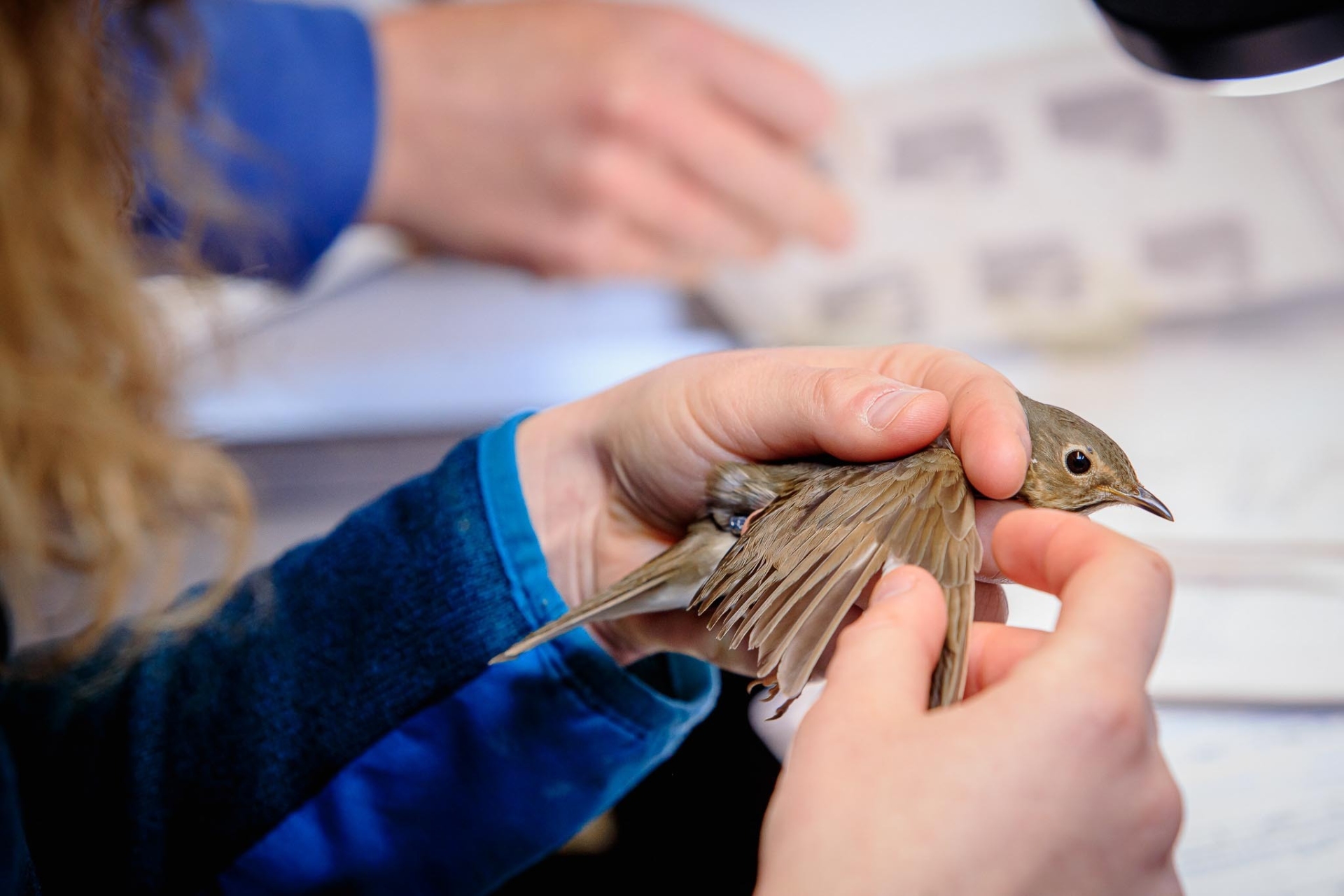
©Swainson's ThrushPhoto: Chris Kindratsky
©Swainson's ThrushPhoto: Chris Kindratsky
Long Point is one of North America’s most important migration corridors—a globally significant route where millions of birds move between breeding and wintering grounds. Within this landscape, LPBO is a world-renowned center for bird research, education, and training, supports conservation across the hemisphere and driving the mission of Birds Canada. LPBO consists of three research stations on Long Point—Old Cut, Breakwater, and The Tip. Through long-term monitoring as part of the Canadian Migration Monitoring Network (CMMN), we are able to track changes in bird populations and provides evidence that informs conservation decisions, policy, and habitat protection across international flyways.
LPBO’s impact extends far beyond Long Point. This data is used by Birds Canada and its collaborators to support global research, strengthen conservation strategies, and helps safeguard birds across Canada and beyond. Each year, it also educates thousands of people, fostering a deeper connection to nature while growing a community committed to protecting birds for generations to come.
Migration Monitoring
LPBO’s core work focuses on migration monitoring through standardized daily counts and bird banding to track population trends, demographic information, and broader patterns in migration ecology. This long-term effort, active since 1960, has created the longest-running dataset of its kind in the Americas.
Long Point’s unique geography, extending 32 km into Lake Erie, funnels large numbers of birds, insects, and bats during migration, making it an exceptional place to study species as they move between breeding and wintering grounds. This is especially important for species that breed in northern Canada, where traditional monitoring is difficult. Through daily counts, banding, and collaborative research, LPBO helps answer key questions about how bird populations are changing and why.
You can get involved through Training and Workshops and LPBO Volunteer Opportunities, each offering a chance to be part of the work happening at Long Point.
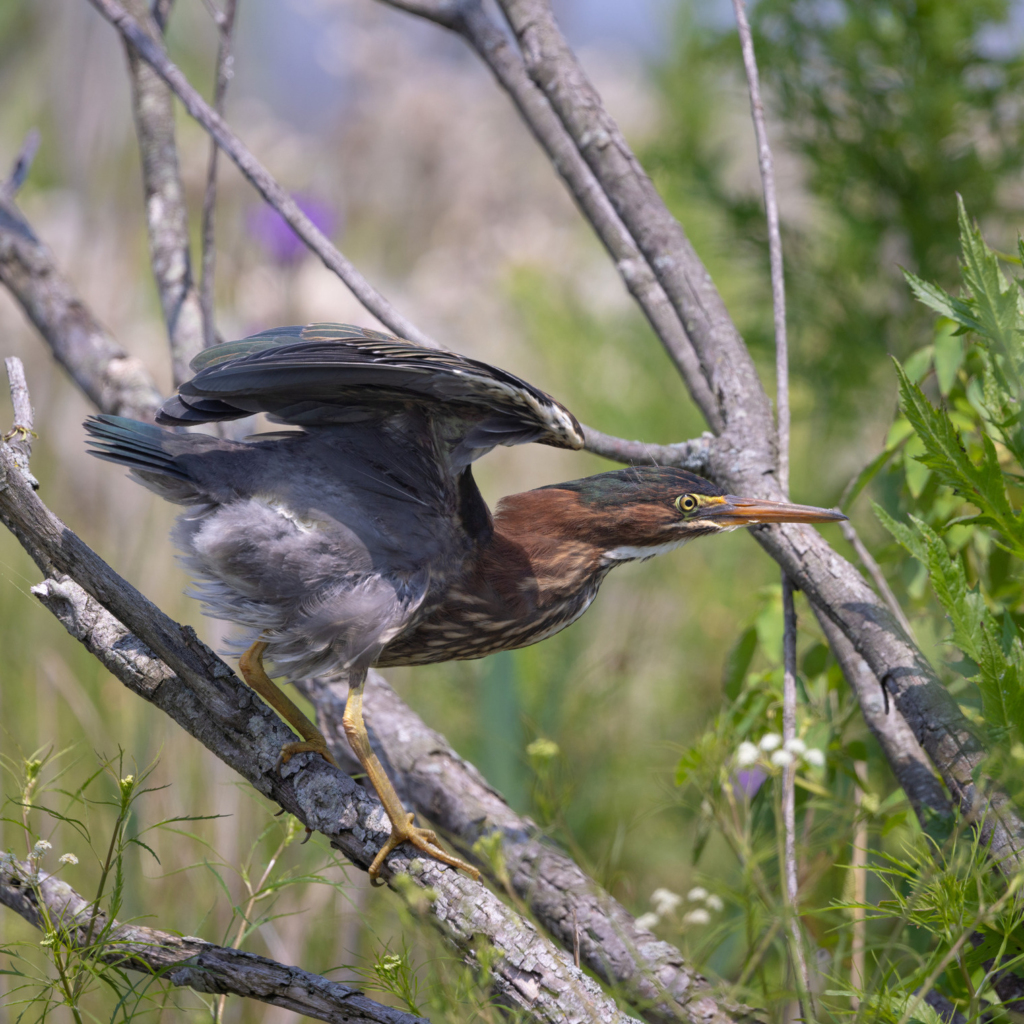
©Green HeronPhoto: Kalvin Chan
Collaborative Research Opportunities
LPBO supports a wide range of collaborative research in the Long Point region. Each year, researchers from around the world work here on topics including migration and stopover ecology, behaviour, physiology, species at risk, reptiles and amphibians, insects, and climate change. To support this work, LPBO maintains three research stations and provides:
- Access to and extensive regional Motus Wildlife Tracking System network
- Access to trapping materials and research equipment for birds and other wildlife
- Expert knowledge of local flora and fauna and how to operate in Long Point’s landscape
- Access to long-term datasets and integration with ongoing monitoring programs
- Accommodation for researchers
- Wet and dry laboratory space
- High-speed internet
- Training opportunities for students
- Boat, canoe, vehicle, and ATV access
Interested researchers can contact the LPBO Coordinator for more information: lpbo@birdscanada.org
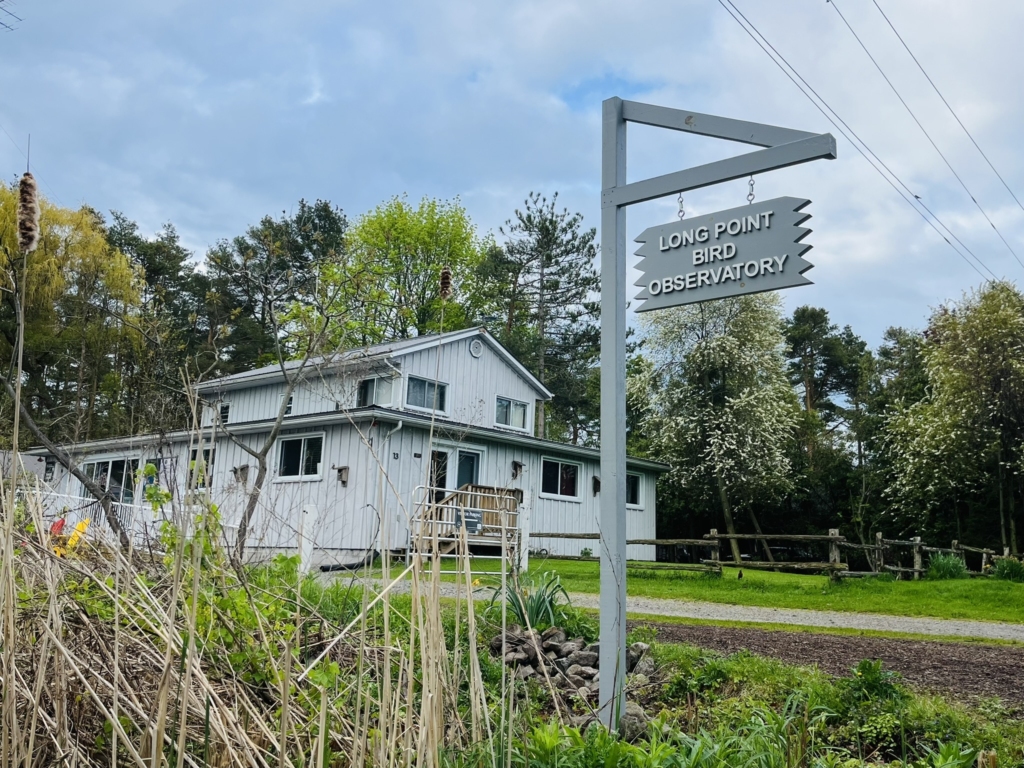
©Old Cut Research Station, Long PointPhoto: Emma Buck
Training and Workshops
International Ornithological Training
Many of the birds in Canada are long-distance migrants and spend more time each year on Neotropical wintering grounds than they do with us. The health of bird populations hinges on the protection of their wintering areas. With subtropical and tropical habitats under intense pressure, we need to foster good conservation and research throughout Latin American and the Caribbean, and it is critical that there is local capacity to carry out as much of this work as possible. Conservation in the Neotropics will be most effectively advanced through grassroots efforts, based upon information gathered by well-trained conservation biologists.
In 1995, Birds Canada, in association with Environment and Climate Change Canada’s Canadian Wildlife Service, launched Long Point Bird Observatory (LPBO)’s Latin American Exchange Program. This project invites talented Latin American biologists to spend an entire month or more at LPBO, refining their field and teaching skills. Then they return to their home countries to share their learning. LPBO also helps organize and deliver training workshops in the Neotropics as opportunities allow. To date, LPBO has trained more than 150 individuals from 15 countries.
Doug Tarry Young Ornithologists’ Workshop (YOW)
Every year we invite promising young naturalists and birders from across Canada to experience nature and ornithology firsthand in a research-oriented setting. Workshop participants (hereafter,“YOWs”) enjoy a wide range of hands-on natural history and scientific activities with a focus on bird banding and migration monitoring at Long Point Bird Observatory (LPBO) in southern Ontario. Space is limited to six participants per workshop, ranging in age from 13-17 years of age. There is one session planned for 2026, which will run August 1 to 8, 2026.
LPBO has been hosting youth training workshops since 1975 and established the Doug Tarry Natural History Fund and Young Ornithologists’ Workshop & Internships in 1991 thanks to the generosity and foresight of the humanitarian and naturalist, Doug Tarry. The workshops have since nurtured the interests and skills more than 200 of Canada’s best and brightest scientists, field biologists, and naturalists.
The cost of the workshop is $500/person, which is heavily subsidized by funding provided by Long Point Bird Observatory and the Doug Tarry Natural History Fund. The fee covers all direct costs of the workshop (accommodation, meals, workshop travel, equipment and materials, special activities while at Long Point, and professional staff with a 2:1 participant-to-instructor ratio). Participants are responsible for their own transportation to and from Long Point, but pickups at the nearest airport/train stations can be arranged. Prospective participants should complete the application form and send via email to lpbo@birdscanada.org. Applications close in April each year.
Young Ornithologists’ Internship (YOI)
Month-long student internships are available to youth ages 13-17 with clearly demonstrated interests in field ornithology. Interns are often graduates of LPBO’s YOW, but it is not necessary. Each spring (April through June) or fall (August-October), one or more interns spend three to four weeks at LPBO, assisting with all aspects of LPBO operations to further develop their skills and work alongside biologists from around the world. Interns are encouraged and expected to participate in LPBO programs with above-average initiative and attention to independent field research projects with the help of LPBO staff and cooperators. Prospective participants of the internship should email Long Point Bird Observatory at lpbo@birdscanada.org.
Targeted Training Workshops and Field Courses
LPBO provides targeted training workshops and field-based courses that compliment university curricula and give students hands-on experience in applied ecology and conservation. University groups or other naturalist clubs and school groups can inquire about workshops and field courses designed to help develop practical skills in ecology, with a focus on ornithology. Through access to long-term monitoring programs, research infrastructure, and experience field staff, students can develop skills in bird banding, species identification, field survey techniques, radio telemetry, data collection, and other ecological research methods. These opportunities help bridge the gap between classroom learning and professional practice, thus preparing the next generation of conservation scientists. Interested parties should reach out to Long Point Bird Observatory at lpbo@birdscanada.org about workshop focus, fees, and activity development.
Other training opportunities for youth in Canada
Beaverhill Bird Observatory’s Geoff Holroyd Young Ornithologists’ Workshop is offered in August and located near Edmonton, Alberta. Ontario Field Ornithologists’ Alan Wormington Young Birder Camp is offered in August at Algonquin Park, Ontario. Bird Protection Québec will provide financial assistance to Québec teens wishing to attend either the Doug Tarry Young Ornithologists’ Workshop in Long Point or the Observatoire d’oiseaux de Tadoussac and Regroupement Québec Oiseaux Ornithology Camp offered in August at Tadoussac, Québec. For information visit here. Check out the links above for more information about each workshop, including application requirements and deadlines.
Visit Old Cut Research Station
We welcome you to visit us and experience the action up close at Long Point Bird Observatory’s Old Cut Research Station. Plan your visit and explore what’s happening at Long Point.
Long Point Bird Observatory
Stay Connected and Support LPBO
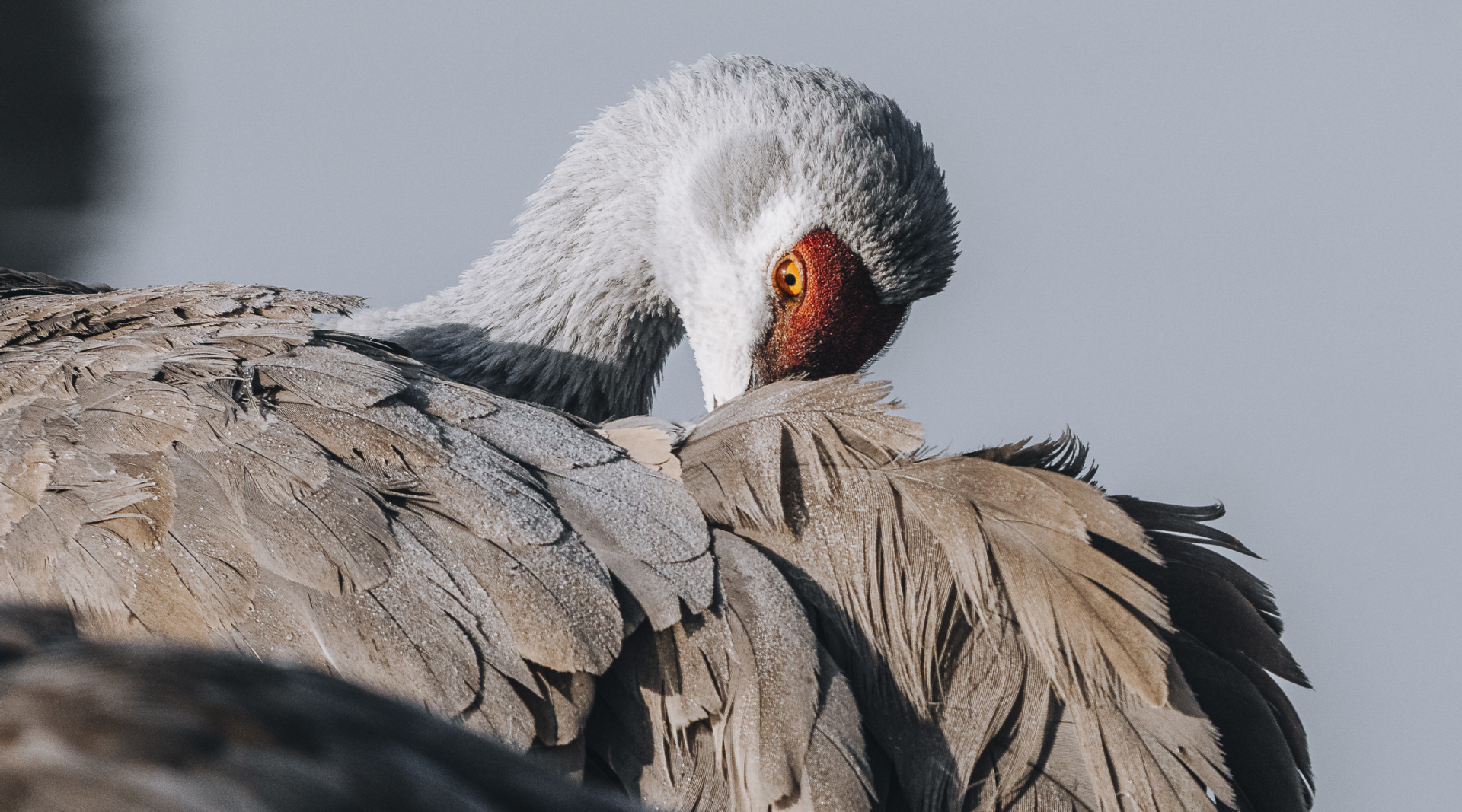
©Sandhill CranePhoto: Jeff Rivait
Thank you to Vortex Canada for their continued support